Confronting the Global Waste Crisis: Pathways to a Circular Future
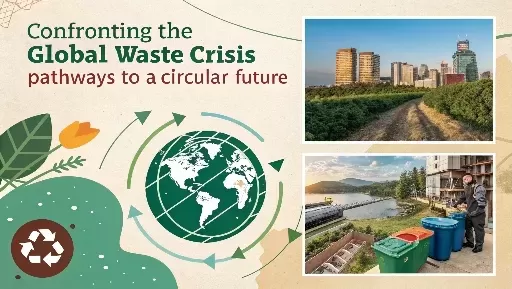
As the planet grapples with an unprecedented surge in waste—projected to hit 3.8 billion tonnes annually by 2050—the urgency to overhaul waste management systems and scale recycling innovation has reached a critical juncture. With waste volumes expanding twice as fast as the global population, transitioning from a linear "take-make-discard" framework to a circular economic model is no longer optional but imperative. Central to this shift are the principles of reduction, reuse, and recycling, underpinned by globally unified metrics to track progress and hold nations accountable.
Designing Sustainability from the Ground Up
The EcoWaste conference in Abu Dhabi spotlighted the transformative power of embedding circularity into product and infrastructure design. The UAE's Masdar City serves as a pioneering example, built with 90% recycled aluminum and low-carbon cement, aligning with the nation's Circular Economy Policy 2021-2031. Similarly, the Netherlands has emerged as a European leader, targeting full circularity by 2050 through material recovery hubs and legislative frameworks that promote resource efficiency. These efforts underscore how early-stage sustainable design can slash emissions and lock in long-term material value.
Battling the E-Waste Tsunami
The UN's Global E-waste Monitor reveals a mounting crisis: by 2030, discarded electronics could total 82 million tonnes yearly—a 33% leap from 2022. Alarmingly, e-waste is multiplying five times faster than recycling rates. Closing this gap demands innovation, such as automated disassembly systems and chemical recycling methods. The UAE's Enviroserve, the Middle East's first integrated e-waste hub, processes 39,000 tonnes annually, while tech giants like Apple deploy robots like "Daisy" to recover precious metals from discarded devices. Achieving the UN's 60% e-waste recycling target by 2030 hinges on such scalable, cross-sector solutions.
Harnessing Waste as a Resource
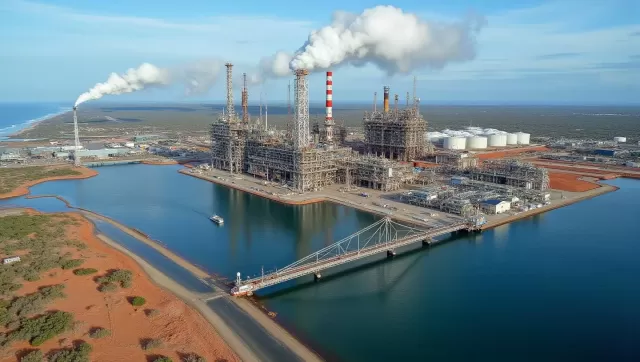
Waste-to-Energy (WtE) technologies are proving indispensable in curbing landfill dependency while generating renewable power. The UAE's Tadweer Group is constructing a landmark WtE plant to convert 900,000 tonnes of waste yearly into energy, slashing CO2 emissions by 1.1 million tonnes. Projects like Sharjah's WtE facility and Dubai's Warsan Centre mirror this ambition, channeling non-recyclable waste into electricity for thousands of homes. Sweden's success, where 50% of household waste powers district heating and even prompts waste imports, illustrates WtE's potential as a linchpin of sustainable waste ecosystems.
Greening Waste Logistics and Public Participation
Decarbonizing waste collection is gaining traction, with cities like Cambridge adopting electric trucks, solar-powered depots, and biofuels to achieve net-zero waste operations. Meanwhile, public engagement tools like reverse vending machines (RVMs)—rewarding users for recycling bottles and cans—have driven Norway and Germany to surpass 90% plastic recycling rates. IoT-enabled RVMs and gamified apps are further democratizing recycling, transforming citizens into active participants in the circular economy.
The Roadmap Ahead: Policy, Innovation, and Collaboration
The UAE is positioning itself as a global sustainability torchbearer through initiatives like the Net Zero 2050 Strategy, the World Future Energy Summit, and the EcoWaste exhibition. Organizations such as Tadweer Group exemplify this vision, targeting an 80% landfill diversion rate for Abu Dhabi by 2030 through advanced technologies and cross-border partnerships. However, global success demands a mosaic of strategies: stringent policies to incentivize circular design, investments in recycling infrastructure, and public awareness campaigns to reshape consumption patterns.
In uniting these efforts—from boardrooms to households—the world can redefine waste not as an endpoint, but as the foundation of a regenerative future.
This version emphasizes a dynamic narrative flow, prioritizes active voice, and clusters related themes while preserving all critical data and examples. Let me know if further refinements are needed!