Business Leaders Defend Green Transition Amidst Backlash

At the most recent World Economic Forum in Davos, the conversation surrounding the global energy transition took a sharp and occasionally blunt turn. Leading executives and policymakers are confronting a growing wave of skepticism toward green initiatives, with several high-profile figures characterizing the current political backlash as a dangerous distraction from long-term economic and environmental realities.
Challenging the Short-Term Narrative
The leadership at Allianz, one of the globe's premier insurance providers, has taken a firm stance against the idea that Europe might retreat from its climate commitments. CEO Oliver Bäte dismissed the suggestion that net-zero goals are a passing trend, labeling the recent pushback as a result of short-term thinking. According to Bäte, the responsibility to future generations necessitates a steadfast commitment to the energy transition, regardless of current political fluctuations.
Bäte also highlighted a shifting global dynamic, suggesting that Europe and the West should look toward the East for a blueprint on scaling green technology. He noted that China is rapidly positioning itself as a dominant force in both the production of renewable energy and the reduction of its associated costs. For Allianz, the strategy remains clear: maintain a steady focus on the 2050 net-zero target without succumbing to the pressure of unrealistic, immediate milestones or political cycles.
Moving Beyond Net Zero to Real Zero
The debate also touched on the terminology of the transition itself. Andrew Forrest, the executive chairman of mining giant Fortescue, argued that the phrase "net zero" has become a shield for businesses to avoid substantive change. Forrest is advocating for a transition to "real zero" by 2040, which entails the total elimination of fossil fuel combustion rather than relying on carbon offsets or credits.
Forrest presented a compelling economic argument for this shift:
- Renewable energy technology follows a steep downward cost curve, making it increasingly more affordable than traditional fuels.
- Fossil fuel operating costs remain volatile or rise over time, creating a competitive disadvantage for those who stay tethered to them.
- Companies that pivot to "real zero" provide their shareholders with a more stable and lower-cost energy foundation.
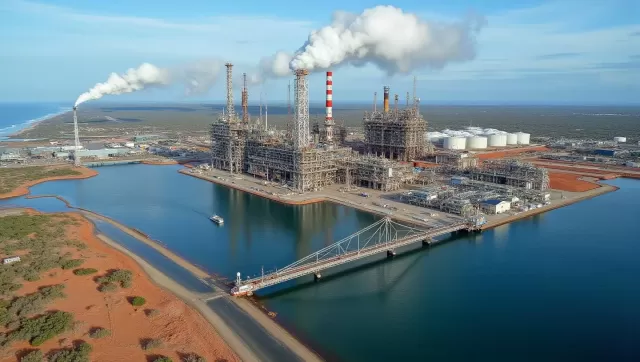
By focusing on the Australian mining sector, Fortescue aims to demonstrate that even hard-to-abate industries can end their reliance on hydrocarbons by the end of the decade.
The Conflict Between Political Rhetoric and Scientific Reality
The gathering in Switzerland also underscored a growing divide between some political leaders and climate advocates. While some voices continue to question the validity of human-caused climate change or the viability of wind and solar power, EU officials are stressing that the environment does not react to political discourse.
EU Climate Commissioner Wopke Hoekstra emphasized that the physics of the planet remain unchanged by debate. The focus, he argued, must remain on the volume of carbon emissions and the resulting economic damage caused by a warming world. Despite pockets of skepticism, the European Union continues to see massive economic opportunities in the development of:
- Advanced battery storage systems
- Large-scale solar arrays
- Next-generation nuclear energy projects
Innovation as the Driver of Change
While regulation plays a role, many industrial leaders believe that the ultimate solution lies in technological breakthroughs. Joe Kaeser, chairman of Siemens Energy, suggested that the transition should be viewed through the lens of innovation rather than just compliance. He believes that by working directly with customers to develop economically viable pathways to decarbonization, the private sector can achieve its targets without relying solely on government mandates.
The consensus among these business leaders is that while the political landscape may be shifting, the economic and environmental imperatives for a green transition are stronger than ever. The focus is now moving away from theoretical debates and toward the practical, technological, and financial execution of a carbon-free future.