Thailand's Andaman Coast Dugong Crisis Deepens
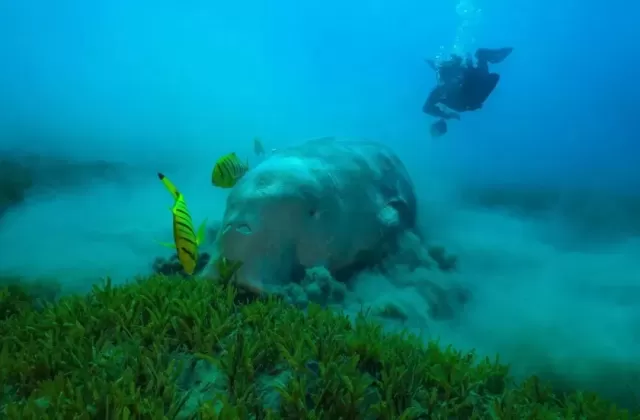
The marine ecosystem along Thailand's Andaman Coast is facing a quiet but devastating emergency. Recent data suggests that the local dugong population, which stood at approximately 273 individuals in 2022, has plummeted. Wildlife experts fear that more than half of these gentle "sea cows" may have vanished in just a few years. This decline is punctuated by a rising number of strandings and deceased animals washing up on shores, signaling a deep-rooted crisis in the region's biodiversity.
The Desperate Search for Sustenance
While the majority of Thailand's dugongs historically thrived in the seagrass-rich waters of Trang province, a significant shift in their distribution has been observed. These mammals are increasingly appearing near Phuket, nearly 100 kilometers away from their traditional habitats. This movement is not a sign of a growing population, but rather a desperate migration. As their primary food sources disappear, dugongs are forced to travel vast distances to find the underwater meadows they need to survive.
Behavioral Shifts in Fragmented Habitats
In areas like Tang Khen Bay, the impact of food scarcity is changing the very nature of the species. Once a communal grazing spot for over a dozen dugongs, the bay is now home to a solitary resident known as Miracle. This individual, who earned his name after surviving multiple strandings, has become uncharacteristically territorial. In a struggle to protect the thinning patches of seagrass, Miracle has been known to drive away other dugongs, highlighting how resource depletion can force even peaceful marine life into aggressive competition for survival.
Investigating the Seagrass Die-Off
The catalyst for this crisis is the rapid degradation of seagrass, the foundation of the dugong's diet. While coral reefs often suffer from rising sea temperatures, the situation for seagrass in the Andaman Sea is more nuanced. Researchers noted that the die-off began during a period of cooler-than-normal water temperatures in 2023, suggesting that climate change is only one part of a larger, more complex problem. Scientists are now investigating a combination of environmental stressors, including:
- Increased water turbidity and siltation that prevents sunlight from reaching the plants.
- Pollution and an overabundance of dissolved nutrients in the coastal system.
- Disruption caused by dredging and coastal development.
- Unusual tidal patterns that leave seagrass beds exposed for too long during the day.
Global Treaties and Local Awareness
Efforts to reverse this trend are tied to both international policy and local advocacy. The recent activation of the UN's high seas treaty represents a significant step toward protecting 30% of the world's oceans by 2030. This legal framework aims to manage marine life sustainably beyond national borders, providing a potential safety net for migratory species.
On a local level, conservationists are working to bring the dugong out of the shadows. Unlike sea turtles or dolphins, dugongs often lack the "cultural charisma" that attracts major funding and public sympathy. Local photographers and activists are now using visual storytelling to build a social movement, hoping that if these animals become a symbol of Thailand's natural heritage, the drive to protect their remaining habitats will gain the necessary momentum. Without a concerted effort to restore seagrass and mitigate coastal pollution, one of the world's most significant dugong populations remains on the brink of disappearance.