Gorgon CCS Project Falters, Raising Doubts
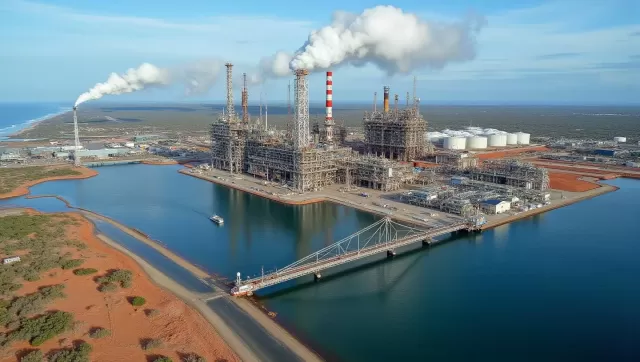
A landmark carbon capture and storage (CCS) project, once promoted by energy major Chevron as the largest of its kind, is confronting severe operational challenges. Situated on Barrow Island off the coast of Western Australia, the multi-billion-dollar Gorgon CCS facility is failing to meet its objectives, and its performance is deteriorating over time.
A Flagship Project's Troubled Performance
The Gorgon project, developed with partners including Shell and ExxonMobil, was designed to be a cornerstone of emissions reduction for a massive liquified natural gas (LNG) operation. With a price tag of $3 billion, bolstered by $60 million in Australian federal funding, the goal was ambitious: to capture and bury up to 4 million tonnes of CO2 annually in a deep underground reservoir. This was intended to slash the LNG facility's direct emissions by 40%.
However, the reality has fallen far short of this promise. After significant delays pushed its start date from 2016 to 2019, the CCS facility has struggled. Following an initial period of moderate success, the volume of CO2 injected underground has decreased each year. Recent data from Chevron shows that just 1.33 million tonnes of CO2 were stored in the last financial year, a notable drop from 1.59 million tonnes the year prior and 1.72 million tonnes the year before that.
Chevron attributes the declining rates not to a failure of the core technology but to difficulties in managing pressure within the subterranean reservoir. The company has paused operations at two injection wells to address these safety and management concerns, stating that injection rates have been reduced while they work to optimize the system.
A Questionable Climate Solution
This underperformance has drawn sharp criticism, with energy analysts highlighting that the project is now operating at only half its effectiveness compared to five years ago. According to analysis from the Institute for Energy Economics and Financial Analysis (IEEFA), the declining results cast serious doubt on the overall feasibility of large-scale CCS projects.
Furthermore, critics point out a fundamental limitation. Even if the Gorgon CCS facility were operating at its full intended capacity, it would only mitigate less than 3% of the total lifecycle emissions produced by the LNG. This calculation includes the emissions released when the gas is ultimately shipped and consumed overseas, underscoring the argument that CCS does little to address the broader climate impact of fossil fuels.
Political Support vs. Practical Results
Despite these setbacks, CCS technology continues to receive strong backing from both industry and government in Australia and abroad. The Australian government has designated another proposed facility, the Bonaparte CCS development in the Northern Territory, as a major project to fast-track its approval. Resources Minister Madeleine King has publicly stated that achieving net-zero emissions will be nearly impossible without CCS and has actively promoted investment in the technology, granting numerous permits for offshore CO2 storage exploration.
This political enthusiasm, however, contrasts with a growing body of evidence questioning the technology's effectiveness. Some experts and climate advocates argue that CCS primarily serves as a form of greenwashing, allowing for the continued expansion of fossil fuel operations under the guise of environmental responsibility.
The Bigger Picture: A Global Reality Check
A look at the global landscape reveals the limited impact of CCS to date. An Imperial College London report found that since 1996, only 383 million tonnes of CO2 have been stored worldwide. This cumulative total over nearly three decades is equivalent to just 10 days of current global emissions. Annually, existing projects store around 45 million tonnes, which accounts for a mere 0.1% of global climate pollution.
Even supporters of the technology, such as Dr. Martin Jagger, a consultant formerly with Shell, acknowledge that CCS remains a marginal tool that has yet to make a meaningful impact on the climate. He warns that without confronting this reality, public funding for projects that are busy but not effective may soon dry up. Compounding the issue, data from the Global CCS Institute shows that of the 77 operational projects worldwide, approximately half use the captured CO2 for enhanced oil recovery—a process that injects the gas into oil fields to extract more fossil fuels, thereby contributing further to emissions.
Official assessments are also becoming more cautious. The Australian government's Climate Change Authority investigated the role of CCS and concluded that the technology's potential contribution to emissions reduction did not align with earlier, more optimistic ambitions.
Ultimately, the persistent support for CCS is increasingly at odds with its high costs and poor track record. Analysts suggest that the powerful influence of the oil and gas industry plays a significant role in keeping the technology on the political agenda. This comes at a time when renewable energy sources offer a more cost-effective and proven path to decarbonization, outcompeting fossil fuels, especially when the immense expense of CCS is factored in.