The Source of Rain: A New Key to Food Stability
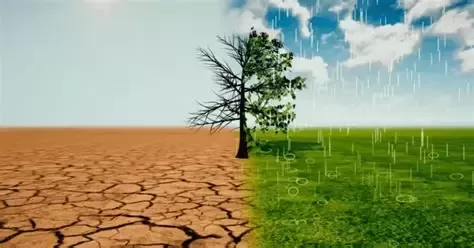
The stability of our global food supply may depend on a factor that has long been overlooked: the birthplace of our rain. Groundbreaking research reveals that not all rainfall is created equal. Its origin, whether from the vast expanse of the ocean or from local landmasses, fundamentally alters its impact on agriculture and regional drought vulnerability.
Moisture that evaporates from the ocean often travels thousands of miles in major weather events like monsoons and atmospheric rivers, delivering substantial and reliable precipitation. In contrast, moisture originating from land—evaporating from soil, plants, and forests—tends to generate lighter, more sporadic showers. A new study highlights that the balance between these two sources is a powerful predictor of agricultural fortune.
A Critical Threshold for Drought Risk
Using two decades of advanced satellite imagery, researchers have pinpointed a crucial tipping point for croplands worldwide. Their analysis demonstrates that when the proportion of land-based precipitation exceeds approximately one-third of the total rainfall, farmlands face a significantly heightened risk. In these areas, soil moisture plummets, and crop yields become far more volatile, leaving them susceptible to failure, especially during critical growth phases.
This insight provides an entirely new lens for assessing drought. It shifts the focus from simply measuring the amount of rain to understanding its source, offering a proactive tool for farmers and water managers to anticipate and adapt to changing climate conditions.
Global Hotspots Facing Mounting Pressure
The study identifies two major agricultural regions where this dynamic is playing out with serious consequences: the U.S. Midwest and East Africa.
The American Midwest, one of the world's most productive grain belts, is increasingly dependent on land-sourced moisture. This reliance creates a dangerous self-perpetuating cycle of drought. When the ground begins to dry, there is less water available to evaporate, which in turn leads to less rainfall in the future, intensifying the dry conditions. To combat this, experts suggest a renewed focus on strategies like enhancing soil's ability to retain water, optimizing irrigation systems, and carefully timing planting schedules to maximize available moisture.
In East Africa, the challenge is different but equally urgent. The expansion of farmland is often happening at the expense of local rainforests. This presents a stark paradox: the very forests being cleared are essential generators of the rainfall that the new crops need to survive. This deforestation threatens to undermine the region's long-term food security by eliminating a vital source of moisture.
Forests as Natural Rain Generators
The research underscores the indispensable role of natural ecosystems, particularly forests, in maintaining healthy rainfall patterns. Through a constant process of evaporation and transpiration—the release of water vapor from leaves—forests act as massive, natural humidifiers. They pump enormous quantities of moisture into the atmosphere, which then forms clouds and delivers life-sustaining rain to adjacent agricultural lands.
Protecting and restoring these forested areas is not just an act of environmental conservation; it is a direct investment in agricultural resilience and the stability of our food systems.
Forging a Path to Climate-Smart Water Management
This pioneering work establishes a clear connection between land management choices, rainfall reliability, and agricultural productivity. It provides a new framework for developing climate-resilient strategies that can safeguard food production in a warming world. By using satellite-based mapping to identify the origins of a region's water, policymakers can better direct investments toward critical interventions, such as forest conservation, advanced irrigation technology, and soil health initiatives, to secure a more stable and sustainable agricultural future.