Waymo Halts SF Robotaxi Service Amid Power Outage
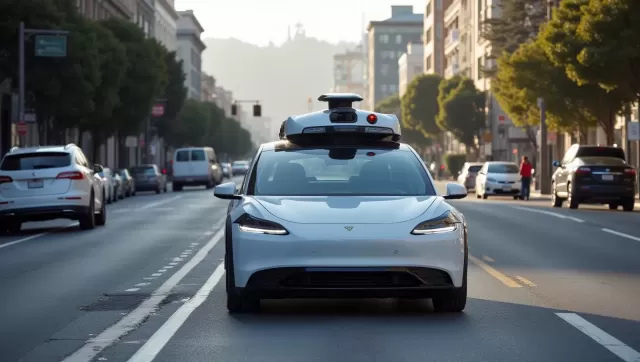
Alphabet's autonomous driving division, Waymo, was forced to pause its driverless ride-hailing operations in the San Francisco Bay Area following a massive power outage that disrupted the city's infrastructure on Saturday.
Company representatives confirmed the suspension, citing the extensive loss of electrical power as the primary cause. Waymo emphasized that its teams are coordinating closely with local city officials to manage the situation and expressed hope that services would come back online promptly. The company asked customers for patience while they navigate the infrastructure failure.
The blackout, which originated from a fire at a Pacific Gas and Electric (PG&E) substation, caused significant damage and impacted approximately 130,000 customers at its peak. While power was gradually restored, tens of thousands of residents in areas like the Richmond District, the Presidio, and downtown San Francisco remained in the dark through Sunday morning.
Traffic Disruptions and Stalled Vehicles
As traffic signals failed and the grid went down, social media platforms were flooded with reports of Waymo vehicles struggling to navigate the chaotic conditions. Videos and eyewitness accounts described driverless cars stalling in active traffic lanes.
Local residents reported seeing multiple autonomous vehicles (AVs) stopped dead in the street. In one instance near Turk Boulevard and Parker Avenue, a resident observed at least three Waymo cars immobilized in the roadway around 9:45 p.m., obstructing the flow of traffic during the blackout.
San Francisco Mayor Daniel Lurie addressed the crisis in a public update, noting the deployment of police, fire crews, and parking control officers to manage the affected neighborhoods. He explicitly confirmed that Waymo had paused its service to prevent further congestion as transit systems slowly recovered.
Comparison with Tesla's "Supervised" Systems
Amid the operational chaos, Tesla CEO Elon Musk took to social media to claim that "Tesla Robotaxis" were unaffected by the power failure. However, this comparison requires important context regarding the different regulatory classifications of the two companies.
Unlike Waymo, Tesla does not currently operate a commercial, fully driverless ride-hailing service in San Francisco. The distinctions include:
- Human Oversight: Tesla's ride-hailing options in the area utilize vehicles equipped with "FSD (Supervised)." This system strictly mandates that a human driver sits behind the wheel, ready to take control instantly.
- Permitting Status: According to the California Department of Motor Vehicles and the Public Utilities Commission, Tesla has not secured the necessary permits to run driverless tests or commercial services without human safety supervisors.
- Operational Model: While Tesla aims to launch a dedicated robotaxi network, its current fleet relies on human intervention, whereas Waymo operates fully autonomous vehicles without a human in the driver's seat.
Concerns Over Infrastructure Readiness
The incident has reignited debates regarding the readiness of American cities to host large fleets of autonomous vehicles, particularly during emergencies. Waymo remains one of the few entities running fully driverless public services, competing with international rivals like Apollo Go.
Despite technological advancements, public skepticism remains high. A recent survey by the American Automobile Association revealed that approximately two-thirds of U.S. drivers still harbor fears regarding autonomous technology.
Bryan Reimer, a research scientist at the MIT Center for Transportation, suggests that the San Francisco service pause highlights a gap in the technology's design. He argues that power outages are a predictable aspect of urban life and that AV systems must be robust enough to handle them without causing gridlock.
Reimer emphasized several key takeaways for the future of AV regulation:
- Hybrid Intelligence: For the foreseeable future, transportation systems will likely require a mix of machine and human intelligence, including human backup systems for robotaxis.
- Fleet Caps: State and city regulators may need to determine maximum penetration levels for AVs to prevent overwhelming city streets during infrastructure failures.
- Accountability: Developers of autonomous systems should potentially be held liable for "chaos gridlock" caused by their vehicles during blackouts, similar to how human drivers are responsible for their conduct when traffic lights fail.
As of the latest updates, Waymo has not provided a specific timeline for when full service will resume, nor have they commented on whether any collisions occurred during the outage period.