Fed Faces Political and Economic Storms in 2026
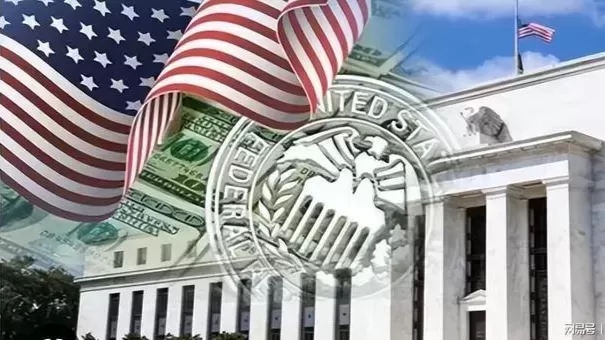
As the calendar turns to 2026, the Federal Reserve finds itself navigating a complex minefield where high-stakes politics collide with delicate economic maneuvering. Following a period defined by three consecutive interest rate reductions, the central bank is entering a phase where future cuts may be scarce. Policymakers are tasked with balancing a resilient growth trajectory against persistent inflationary risks, all while operating under an intense political microscope.
According to economic strategists, the spotlight on the Fed is unlikely to dim. Uncertainty remains the dominant theme, ensuring that central bankers will remain in the proverbial hot seat throughout the year.
Political Pressures and Leadership Uncertainty
The prior year subjected the Federal Reserve to unprecedented scrutiny. Tension between the executive branch and the central bank escalated significantly as President Donald Trump, commencing his second term, frequently criticized Chair Jerome Powell for the pace of rate adjustments. This friction was compounded by controversies surrounding cost overruns at the Fed's Washington headquarters renovation.
The institutional turbulence extended to personnel battles. The administration attempted to remove Governor Lisa Cook based on informal, unproven allegations regarding mortgage documentation. This political drama sets the stage for a chaotic start to 2026, with several critical events converging in January:
- January 21: The Supreme Court is slated to hear arguments regarding the President's authority to remove Governor Cook.
- Late January: The Federal Open Market Committee (FOMC) will convene for its first interest rate vote of the year.
- Chair Nomination: President Trump is expected to reveal his nominee to succeed Jerome Powell, whose term concludes in May 2028, though his chairmanship expires sooner.
- Powell's Future: The current Chair faces pressure to clarify whether he intends to complete his full term on the Board of Governors.
Adding to the complexity, the search for Powell's successor has reportedly involved Treasury Secretary Scott Bessent vetting as many as 11 potential candidates. Furthermore, the internal dynamics of the FOMC are shifting. Recent votes have seen multiple dissents, and incoming regional presidents are viewed as having a more "hawkish" disposition, suggesting a higher resistance to further monetary easing.
The Outlook for Interest Rates
Despite the political noise, Wall Street largely expects the Fed to remain data-dependent, aiming to guide the benchmark interest rate toward a "neutral" stance—estimated to be around 3%. Currently, the funds rate sits approximately 50 basis points above long-term targets.
While Chair Powell successfully navigated the committee through recent 25-basis-point cuts, the path forward is heavily debated among economists:
- The Federal Reserve: The "dot plot" of internal expectations suggests only one additional rate cut this year.
- Nationwide Economics: Forecasts point to two reductions, likely occurring mid-year and near year-end, driven by incoming data.
- Apollo Global Management: Analysts predict a strong economy will limit the Fed to a single cut, citing shifting economic winds.
- Moody's Analytics & Citigroup: Outliers in the forecast anticipate up to three cuts, predicated on potential labor market softening.
Market observers note that the economic environment is transitioning. While 2025 was defined by headwinds such as tariffs and uncertainty, 2026 appears to be gathering tailwinds from fiscal stimulus and a stabilizing labor market. This accumulation of positive momentum could make it increasingly difficult for policymakers to justify aggressive rate reductions.
Artificial Intelligence as a Macroeconomic Variable
Beyond politics and standard metrics, the rapid integration of artificial intelligence has emerged as a critical "wildcard" for monetary policy. Economists argue that assessing AI's dual impact—as a driver of productivity and a potential disruptor of traditional hiring—is now paramount for the Fed.
The challenge lies in communication. With massive capital expenditures flowing into sophisticated technologies, the central bank must articulate how these shifts influence their strategic outlook.
The economic data reflects this technological integration. After a slow start to the year, the economy accelerated in the middle quarters, with preliminary data indicating a 3% growth pace heading into the fourth quarter. This expansion has been mirrored on Wall Street, where AI-focused equities fueled double-digit gains in major averages.
For the Federal Reserve, this creates a unique policy dilemma. They must calibrate rates for an economy that is actively pivoting toward deep technological integration in both goods production and service provision. As the landscape evolves, providing clear strategic direction amidst such structural change remains one of the central bank's most significant hurdles.