
UK Youth Job Crisis Looms Amid Economic Downturn
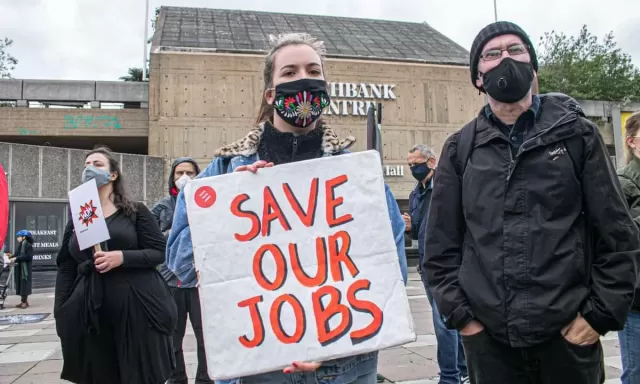
A fresh report from the Resolution Foundation indicates that a shrinking job market is hitting the UK's younger generation the hardest. This analysis comes just ahead of official statistics anticipated to confirm a rise in the national unemployment rate to 5.1 percent. The thinktank points to a significant "jobs deficit" as the primary cause, with both graduates and non-graduates struggling to find work as companies scale back on hiring.
City economists are forecasting that Tuesday's data from the Office for National Statistics will show the unemployment rate for October climbed to 5.1 percent, up from 5.0 percent in the previous month. This jobs data marks the beginning of a significant week for economic updates, with new inflation figures due on Wednesday and a pivotal interest rate decision from the Bank of England on Thursday.
The Forgotten Driver of the Jobs Downturn
The Resolution Foundation's research highlights a crucial shift in the labour market's challenges. While much of the recent discourse has focused on economic inactivity due to long-term health issues, the thinktank argues that rising unemployment is now the core driver of the current downturn. Nye Cominetti, the organisation's principal economist, stressed that young people are once again at the epicentre of an employment crisis, echoing their experiences following the financial crisis and the pandemic. This situation calls for renewed efforts from both policymakers and employers to provide targeted support.
While the Bank of England and the Office for Budget Responsibility have suggested that unemployment may have already peaked, other financial analysts are less optimistic. Several forecasts predict the rate could climb as high as 5.5 percent next year. This is attributed to businesses retrenching in response to a combination of higher taxes, weak consumer confidence, and stagnant economic growth.
Economic Stagnation and Policy Response
The struggling state of the UK economy provides the backdrop for these employment challenges. Ruth Gregory, deputy chief UK economist at Capital Economics, noted the economy's poor performance, highlighting that it has only expanded in one of the past seven months. An economic contraction of 0.1 percent in October means the economy is no larger than it was back in April.
This economic weakness is expected to influence the Bank of England's upcoming decision. An update on inflation is projected to show a slight easing from 3.6 percent to 3.5 percent in November. While modest, this decrease is likely sufficient to prompt the Monetary Policy Committee (MPC) to lower interest rates from 4.0 percent to 3.75 percent. It is widely anticipated that the Bank's governor, Andrew Bailey, who previously voted to hold rates steady, will now side with the MPC members advocating for a cut to stimulate the slowing economy.
Youth Employment Slips on the International Stage
Concerns among ministers are escalating as the number of 16- to 24-year-olds not in education, employment, or training (NEET) approaches the one million mark. The UK's standing in international youth employment rankings has also suffered. A recent report from consultants PWC revealed that the UK has dropped four places to 27th out of 38 OECD member countries, underscoring the severity of the issue.
The Resolution Foundation's report concludes that the decline in employment over the past few years is almost entirely due to a rise in outright unemployment rather than an increase in economic inactivity. Despite this, the labour force participation rate—the proportion of people working or actively seeking a job—remains robust at 79.5 percent, which is higher than pre-pandemic levels and close to the record high set in 2023. This indicates that people want to work, but the jobs are increasingly hard to find, especially for those just starting their careers.