China Prioritizes Economic Interests in Venezuela Crisis
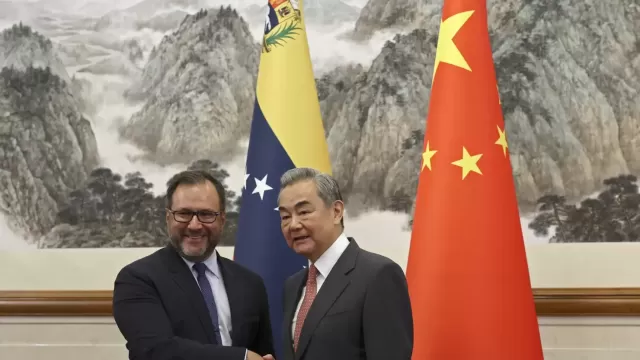
China's primary focus following the U.S. military action in Venezuela is safeguarding its substantial economic interests, according to industry observers. While Beijing swiftly condemned the intervention, calling for dialogue and the release of Venezuelan leaders, its strategic calculations are firmly rooted in protecting its investments and ongoing cooperation.
Beijing has asserted that its "positive communication and cooperation" with the Venezuelan government will persist, regardless of the evolving situation. This includes a commitment to deepening collaboration, particularly concerning oil exports, with assurances that Chinese interests will be legally protected.
The U.S. action, while potentially allowing China to project itself as a "force for stability" globally, also introduces significant concern due to China's considerable exposure in Venezuela. Analysts highlight that the uncertainty stemming from this event could have ripple effects across Chinese businesses operating throughout Latin America and beyond.
Over the past two decades, China has made significant inroads in Latin America, fostering diplomatic relationships with several nations that have shifted recognition from Taiwan to mainland China. This expansion has been accompanied by substantial Chinese investment in Venezuela, with state-owned enterprises leading the charge in energy projects.
Specifically, Chinese companies have invested approximately $4.8 billion in Venezuela over the last twenty years, with a strong emphasis on oil ventures. State-owned behemoth China National Petroleum Corporation maintains joint ventures with Venezuela's Petróleos de Venezuela. More recently, a private firm, China Concord Resources Corp., announced plans for a significant investment exceeding $1 billion in a Venezuelan project aimed at boosting crude oil production.
Protecting Chinese citizens and corporate assets remains Beijing's paramount concern. The Foreign Ministry has reported no instances of Chinese nationals being harmed in the U.S. strike. China has also vocally criticized what it deems "bullying actions" that infringe upon national sovereignty, reinforcing its stance against interference in the internal affairs of Latin American nations. Beijing maintains a policy of noninterference, positioning itself as a consistent partner across the region, devoid of ideological alignment or pursuit of spheres of influence.
An Imbalanced Oil Trade
Despite Venezuela being a key destination for Chinese crude oil, its contribution to China's overall crude oil and condensate imports remains relatively small, accounting for only about 2% in 2024. The majority of China's energy imports originate from the Middle East. Recent data indicates an increase in imports from Iran and Iraq, while Venezuelan shipments have decreased.
Experts suggest that China is likely to exercise caution, avoiding direct entanglement in the Venezuelan conflict due to the country's limited economic significance and geographical distance. China's strategic priority appears to be the protection of its interests, provided that its partner nations do not adopt stances that challenge Beijing's position on Taiwan.
Unchanged Geopolitical Stance
This episode in Venezuela is not expected to alter China's broader geopolitical posture, particularly its approach to Taiwan. Beijing considers Taiwan an integral part of its territory, a stance underscored by recent large-scale military drills conducted around the island in response to a U.S. arms package. Analysts believe that the Venezuela crisis, while significant, will not fundamentally change the existing dynamic between China and the United States.
However, the situation might prompt Beijing to re-evaluate the establishment of legal frameworks for potential future actions concerning Taiwan, drawing parallels to how the U.S. justified its intervention in Venezuela through drug trafficking charges.
Amidst the ongoing developments in Venezuela, China has continued its high-level diplomatic engagements, with President Xi Jinping meeting with the Prime Minister of Ireland and scheduled to host the President of South Korea. These diplomatic efforts underscore China's consistent pursuit of international engagement and influence on the global stage.